
When a boat hesitates or feels weaker as the throttle is advanced, the cause is often more complex than a simple lack of engine power. Acceleration problems can stem from fuel delivery issues, ignition faults, cooling system concerns, propeller damage, marine growth or excessive load. For Sydney boat owners, knowing when to call a marine mechanic can make a difference when acceleration problems continue or return. Understanding the common causes of power loss can help prevent breakdowns and support safer operation on the water.
This guide explains why marine engines lose power under acceleration, the symptoms that may point to specific faults and the practical checks that can be performed before professional diagnosis is required. For more complex issues, Hume Marine can provide the testing and diagnostic expertise needed to accurately identify the source of the problem and restore reliable performance.
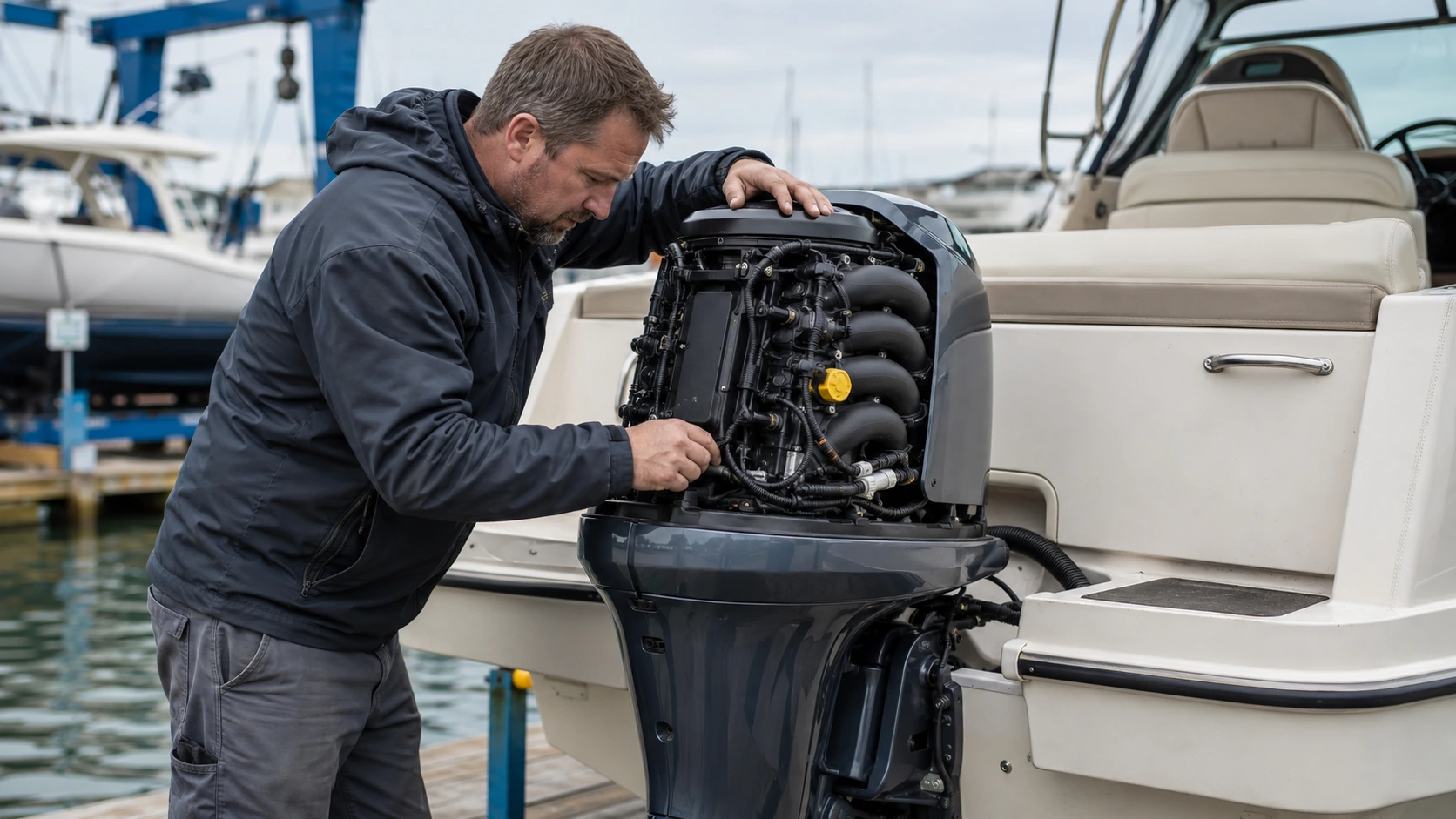
Power loss during acceleration feels different from a boat that is simply underpowered. It is often sudden, inconsistent or clearly out of character for the engine and hull. Instead of a smooth, strong push onto the plane, the boat may hesitate, stumble, surge or fall flat even though the throttle is being pushed forward.
Many boat operators first notice the issue as a change in throttle response. The engine may start and idle normally, yet lose strength as soon as more throttle is applied. Recognising these early signs can help distinguish true power loss from normal variations caused by sea conditions, trim or load.
When power drops during acceleration, the boat may feel sluggish coming out of the hole. The bow may rise, but the hull struggles to climb onto the plane or takes much longer than usual. The throttle lever may be advanced, yet the boat feels as if it is working hard with very little result.
The engine note can also provide a clue. Instead of a smooth rise in revs, the sound may flatten, fade or become uneven as throttle is applied. Some engines cough or splutter briefly before recovering. Others refuse to rev past a certain point under load, even though they may rev freely in neutral.
Vibration can also change. In some cases, the hull, seat or steering wheel may feel rougher as the engine misfires, labours or struggles to transfer power efficiently.
The relationship between RPM and boat speed often helps narrow down the cause. Symptoms may include:
If RPM rises but the boat does not accelerate properly, the issue may involve the propeller, hub, hull drag or driveline. If RPM will not climb under load, the cause may be related to fuel supply, ignition, compression, cooling or electronic engine protection.
Power loss during acceleration may also be accompanied by other warnings. A strong fuel smell near the transom, cockpit or bilge can indicate that fuel is not being burned efficiently or that there may be a leak. This should be treated seriously and checked before the boat is operated further.
Smoke can also provide useful clues. Heavy black smoke may point to poor combustion or over-fuelling, while blue smoke can indicate oil burning. White smoke, steam or abnormal exhaust output may suggest cooling, water intrusion or other engine-related issues.
Modern engines may also trigger alarms, warning lights or limp-home modes when a sensor detects a serious fault. In these cases, the engine may respond normally up to a certain point, then abruptly lose power or refuse to rev beyond a limited range.
Fuel supply problems are one of the most common causes of power loss under acceleration. When the engine demands more fuel to increase speed, any restriction, contamination or pressure issue can show up as hesitation, surging or a flat refusal to rev.
Petrol and diesel marine engines rely on clean, uninterrupted fuel flow at the correct pressure. If the pump cannot draw fuel freely from the tank, or if injectors are not delivering fuel correctly, the engine may run lean, misfire, struggle to reach higher RPM or stall under load.
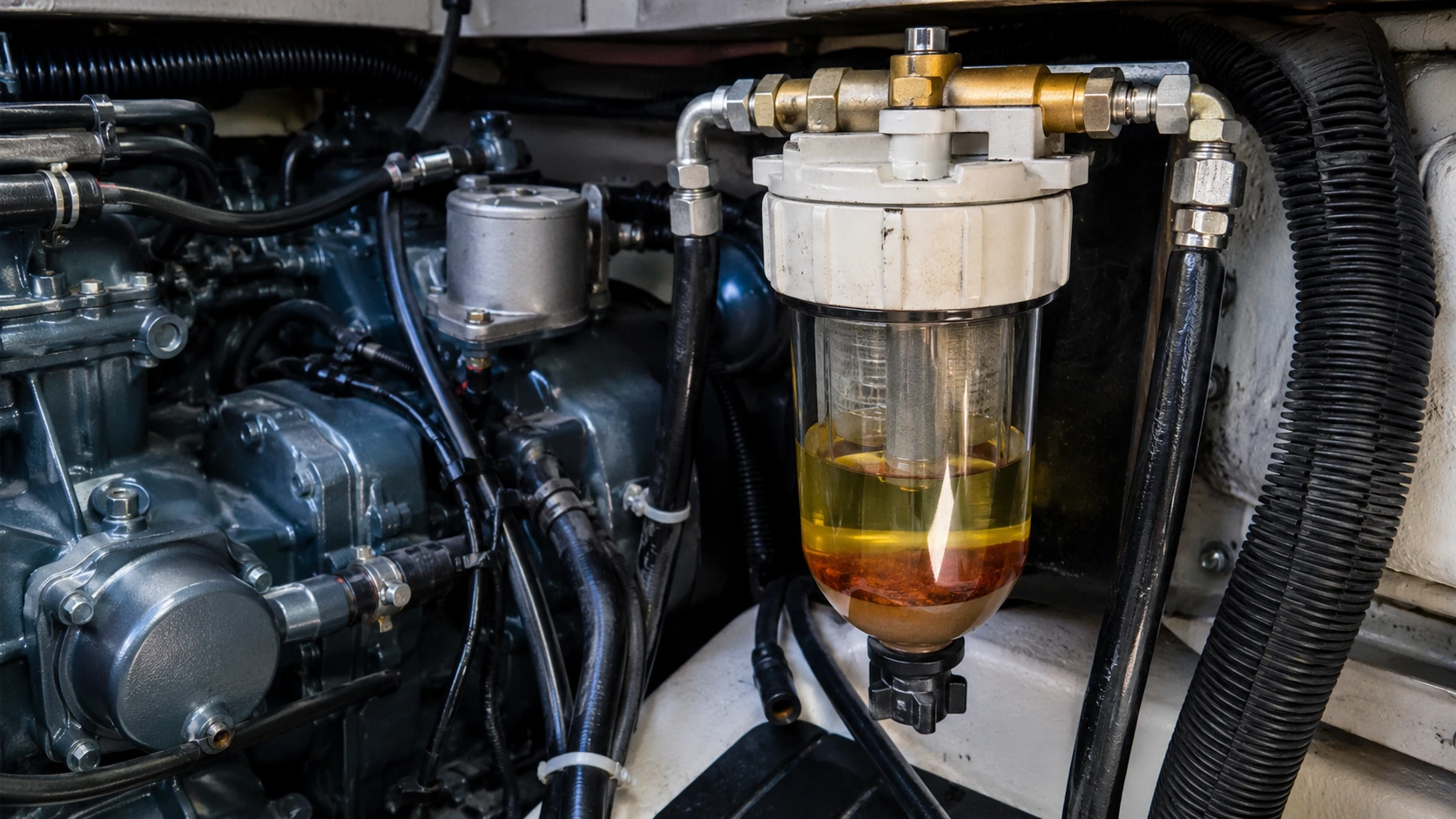
Fuel filters are often one of the first areas to inspect when power drops under load. Marine fuel can contain fine debris, water or contamination from the tank. Over time, filters trap this material and become restricted.
At idle, there may still be enough flow for the engine to run smoothly. As the throttle opens, the restriction prevents the system from supplying the extra fuel volume required. This can cause the engine to stumble, surge or lose power.
Warning signs may include:
If fuel contamination is present, simply replacing a filter may not solve the issue for long. The tank, fuel lines and water-separating filter may also need to be inspected.
Even with clean filters, fuel delivery can be affected by damaged or deteriorated fuel lines. Old hoses can soften, crack, collapse internally or delaminate, sending small fragments downstream. Sharp bends, crushed hoses or blocked tank pickups can restrict flow only when the engine is demanding more fuel.
Air entering the fuel system can create similar symptoms. Loose hose clamps, cracked primer bulbs, corroded fittings or damaged pickup tubes may allow air to be drawn in under suction. This can lead to uneven fuel pressure, rough running and poor acceleration.
Because fuel restrictions and air leaks often appear only under load, they can be difficult to identify without proper testing.
On modern fuel-injected engines, dirty or worn injectors can also cause power loss under acceleration. Injectors must deliver a fine, even spray of fuel. Deposits from stale fuel, contamination or poor maintenance can distort the spray pattern or restrict flow.
The engine may compensate at idle or low speed, but as power demand increases, one or more cylinders may receive less fuel than required. This can cause rough acceleration, increased fuel use, uneven exhaust note, hard starting or visible smoke.
In severe cases, the engine may reach a certain RPM and then refuse to rev higher despite a wide-open throttle.
Ignition problems are another common cause of hesitation or power loss when the throttle is opened. Spark plugs, ignition leads, coils and related components must deliver a strong, consistent spark at the correct time. If they do not, combustion becomes weak or incomplete and the engine can bog down instead of accelerating.
Ignition issues often develop gradually as components wear, corrode or foul. They may not be obvious at idle, but they can become noticeable when the engine is placed under load.
Spark plugs are a primary suspect when a petrol marine engine loses power under load. As throttle is applied, cylinder pressure rises and it becomes harder for a weak ignition system to fire the mixture. Plugs that appear acceptable at idle can still misfire during acceleration.
Common spark plug problems include:
Visual inspection can provide useful clues. Black, sooty deposits may suggest rich running or extended idling. Wet, oily plugs may point to oil control issues or internal wear. White, blistered insulators can suggest overheating or a lean condition. Any of these problems can contribute to hesitation, misfire or weak acceleration.
Even with good spark plugs, poor voltage delivery can cause hesitation under load. Cracked or corroded ignition leads may allow voltage to leak to ground, especially in damp marine environments. This often appears as a stumble or misfire when the engine is pushed harder.
Ignition coils can also break down as RPM and load increase. A coil may appear to work when cold or at idle, then fail intermittently once it heats up. This can create rough acceleration, power loss or inconsistent performance.
Ignition timing can also affect acceleration. If timing is retarded, the engine may feel flat and slow to respond. If timing is unstable, the result may be surging, knocking or hesitation. Timing should be checked using the correct procedure for the specific engine type.
Some mechanical and electrical problems can also feel like ignition failure. Low compression in one or more cylinders reduces the engine’s ability to make power under load. Worn rings, leaking valves, head gasket issues or internal wear may all contribute to weak acceleration.
Cooling problems can also reduce performance. If the engine begins to overheat during acceleration, modern systems may limit power to protect internal components. Blocked water intakes, worn impellers, faulty thermostats or restricted cooling passages can all contribute.
Poor battery voltage or weak electrical connections may also affect ignition and electronic fuel injection performance. In a marine environment, corrosion at terminals, earth points and plugs should not be overlooked.
Not every acceleration problem starts inside the engine. A damaged propeller, fouled hull or overloaded boat can all make a healthy engine feel weak. These issues affect how efficiently power is transferred to the water.
The engine may rev higher than normal while the boat struggles to accelerate, or it may labour heavily under load. Before assuming there is a mechanical fault, it is worth checking whether the hull, propeller and load are contributing to the problem.
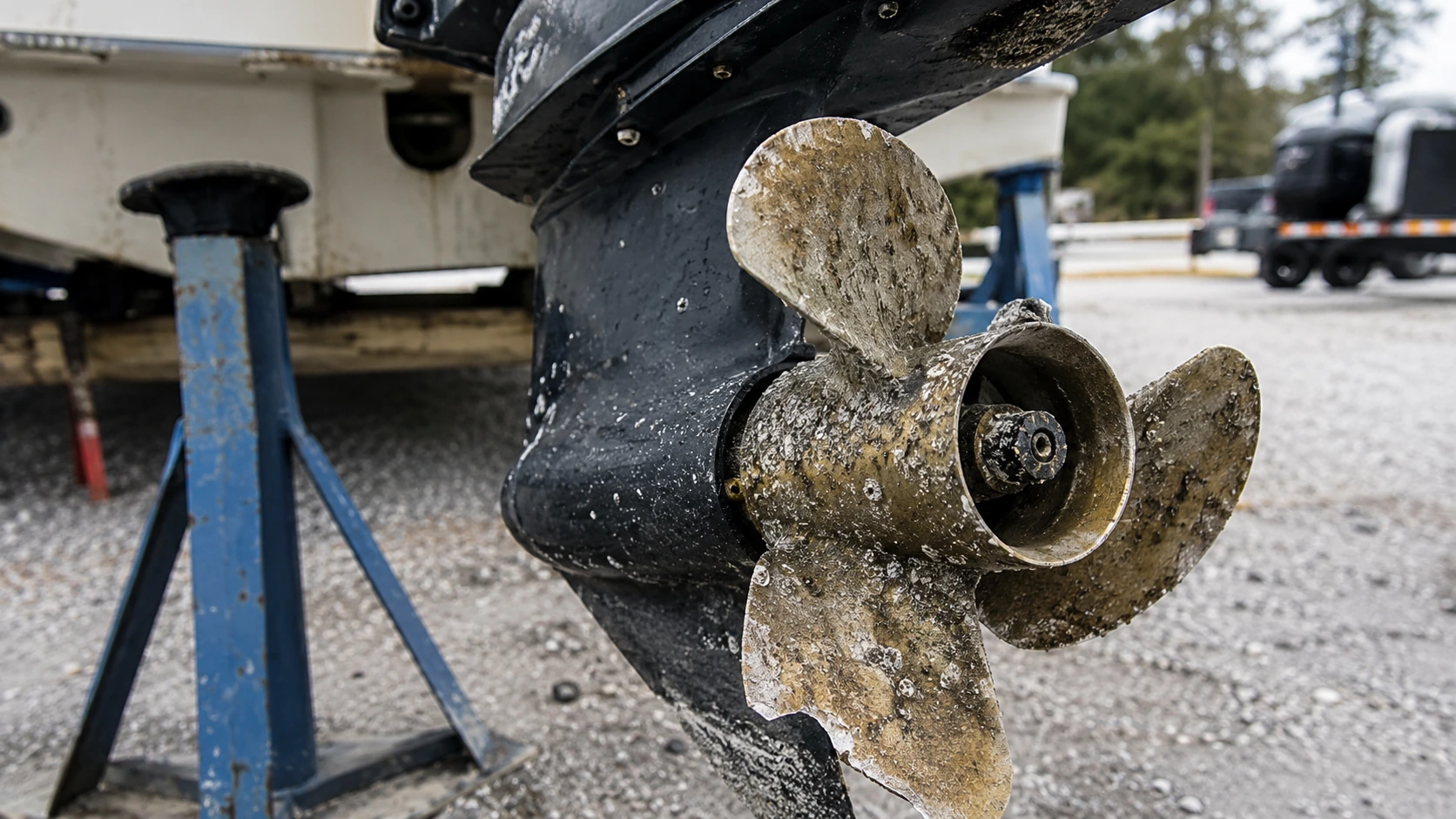
The propeller is the final link between engine power and boat movement. Even small bends, chips or missing sections can disturb water flow and reduce thrust. This can make the boat slow to get on the plane, increase vibration and reduce fuel efficiency.
Common propeller issues include:
Hub slip can feel like sudden power loss, even though the engine itself is still producing power. If the rubber hub inside the propeller fails, the engine may rev, but the propeller will not grip properly. This is often more noticeable during hard acceleration, trimming up or turning.
Marine growth on the hull, propeller or running gear can significantly reduce acceleration. A thin layer of slime may be enough to increase drag, while barnacles and shell growth can disrupt water flow and prevent the boat from reaching normal speed.
Growth on the propeller is especially important because it reduces bite and can make the prop act as if it is damaged or incorrectly sized. If the boat has gradually become slower to plane, uses more fuel or feels heavy through the water, hull fouling may be part of the problem.
Trailer boats should be rinsed and inspected regularly. Moored boats may need scheduled hull cleaning and antifouling maintenance to keep performance consistent.
A boat carrying more weight than usual will need more power to accelerate and climb onto the plane. Full fuel tanks, water tanks, passengers, fishing gear, dive equipment, batteries and stored items can all add up.
Load placement also matters. Too much weight at the stern can cause the bow to rise excessively, making it harder for the hull to transition onto the plane. Poor side-to-side balance can also affect handling and performance.
If power loss only occurs on heavily loaded days, reducing non-essential gear and adjusting weight distribution may help confirm whether load is the main issue.
Modern outboards and sterndrives are designed to protect themselves from serious damage. When certain faults are detected, the engine may limit RPM or reduce power. This is often called limp mode or protection mode.
To the operator, protection mode can feel like bogging, hesitation or the engine refusing to rev past a certain point. In these cases, the engine may not be weak; it may be deliberately limiting performance to prevent damage.
Electronic marine engines may reduce power when they detect problems such as:
Overheating is a common trigger. A blocked water intake, worn impeller, scaled cooling passage or faulty thermostat can cause temperature to rise quickly under load. The engine control unit may respond by cutting power.
Low oil pressure is another serious trigger. If the engine detects insufficient lubrication, it may limit RPM or shut down to protect internal components.
Sensor faults can also cause reduced-power operation. A faulty coolant temperature sensor, oil pressure sender, throttle position sensor, knock sensor or crank/cam sensor can send incorrect data to the engine control module, causing it to adopt a safer operating mode.
Protection mode often feels more consistent than a random mechanical fault. The engine may:
If the engine enters protection mode, it should not be ignored. The system is usually responding to a condition that could damage the engine if operation continues.
A minor hesitation may sometimes occur due to trim, load or sea conditions, but repeated or worsening power loss should be investigated. Knowing when to stop troubleshooting and arrange professional diagnosis can prevent small problems from becoming major engine or driveline failures.
Any new, persistent or worsening power loss under acceleration should be treated as a warning sign.
The boat should not be operated further until inspected if power loss is accompanied by:
These symptoms may point to detonation, internal engine damage, fuel leaks, failing ignition components, cooling failure or serious driveline faults. Continuing to operate the boat can increase the risk of engine failure, fire or loss of control.
Even if the engine still runs, repeated acceleration problems need proper diagnosis. Professional inspection is recommended when:
A marine mechanic can test fuel pressure, inspect injectors or carburettors, check ignition timing, test coil output and confirm compression. For outboards and sterndrives, propeller condition, hub slip, gearcase health, engine height and propeller pitch can also be assessed.
Basic owner checks are sensible, especially when they involve inspecting fuel filters, looking for visible damage, checking load, reviewing alarms and confirming there are no obvious leaks. However, if those checks do not restore normal acceleration, repeated trial and error can waste time and lead to unnecessary parts replacement.
Modern marine engines may store fault codes even when the dashboard warning is not obvious. A technician can connect diagnostic equipment, review live sensor data and test the engine under appropriate conditions. This is especially important for late-model EFI outboards, diesel engines and electronically controlled inboard systems.
Power loss during acceleration is rarely caused by one obvious issue. It may result from fuel delivery restrictions, ignition weakness, cooling problems, propeller damage, marine growth, excess load, poor weight distribution or electronic engine protection systems.
Some causes can be identified through routine checks and basic maintenance, while others require systematic testing. Recognising the early warning signs and addressing them promptly helps reduce the risk of costly repairs, unreliable performance and on-water breakdowns. For boat owners experiencing ongoing acceleration issues, professional diagnosis from Hume Marine can help identify the cause and restore safe, reliable operation.

In 45 years of maintaining our Classic Formula 233......Ian, Scott, Patrick and the team from HUME MARINE are by far the best Marine Engineers we have ever encountered.
Our recent re-powering project involved far more than a standard engine installation, using many custom parts and applying bespoke engineering. Only an organisation like HUME MARINE with the experience and expertise we required was capable of thinking "outside the box" to make it all work.
And work it did! Thank you to Ian and his team for making our dream Formula 233 become a reality.
Fishfinder Charters have known Hume Marine for 20 years plus, Ian and his team conduct there business with total professionalism and reliability, All jobs are treated with care, good diligence and consideration toward time and cost.
He has recently installed our new Cummins main engine to Fishfinder! beautiful Job! every detail was checked comprehensively and double checked to meet survey requirements to conform with safety and reliability. We have no issues with recommending Hume Marine to service your marine mechanical needs.
We received the most extraordinary service, despite the shipyard being busy.
Communication was efficient, effective & with the our specific needs at the forefront.
All staff at Hume Marine were cooperative & helpful with backup & offers of support for us, with our new yacht was above & beyond.
We are extremely grateful to Ian & all his staff for the outstanding service & excellent workmanship at White Bay 6.
Cheerful, happy & willing to go the extra mile. Cannot thankyou enough!
Ian has looked after Sea Squire for many years including installation of a new Steyr diesel motor & a complete mechanical refit. He is always available & offers practical solutions to any issue.
Ian and Scott Hume, along with Anthony (apprentice), recently completed a FULL service onboard our 45' support craft, "The UTE", owned and operated by Iain Murray, and the sailing Team "andoo Comanche". This full service was just a fantastic job, which high levels of enthusiasm and curiosity were on show. They were genuine in their actions, as well as very skilful, and had the whole of job completed in 5 hours, 2 x main engines, 2 x transmissions, all fuel filtration, all lub-oil filtration, seawater impellers, as well as cleaning of machinery space, as they completed. This was a great job, completed by good old-fashioned service, I/we will not use anyone else for our service reliability requirements.
Ian Hume has serviced my boat Palm Beach 38 for a number of years. I have always found him to be responsive and thorough. His knowledge of the Steyr engines and the PB have been very helpful when troubleshooting and fixing problems.
Ian and the guys at Hume Marine have looked after my Caribbean 26 for around 10 years. I literally ran up over 2000 hours of game fishing off Sydney and the boat always got back me back to marina without ever once having to it get towed.
Ian and his crew completely looked and after it, regular engine servicing, engine and stern drive repairs, antifouling, electrical and general boat maintenance.
Great guy, easy to deal with and offers a reasonable price.Thoroughly recommend Hume Marine to anyone who requires boat engine maintenance, repairs, antifouling on their petrol or diesel boats.
Hume Marine has been the best company so far I've used. Wouldn't use anybody else. Do yourself a favour and use ian for your next service.
Ian and the team from Hume Marine have been looking after our boat since returning to Sydney Harbour in 2016.
As the recommended Sydney based Steyr engine expert Ian has demonstrated great knowledge and expertise in maintaining our vessel.
Not only has Ian proven himself to be reliable and trustworthy his advice has always given us great confidence in his work.
Christina and Sharon
Tally Ho
Ian has been servicing my boats for 18 years now and I highly recommend him, he has always been trustworthy and reasonably priced.


