
A delay between selecting forward or reverse and getting propulsion can make a routine docking manoeuvre difficult to manage. Adding throttle might seem like the quickest solution, but it can create a greater risk if the drive suddenly engages. Identifying the symptoms and arranging an inspection can help prevent an unreliable transmission from becoming a safety concern.
For boat owners on Sydney Harbour, dependable gear engagement is important when manoeuvring near berths, other vessels or people in the water. Hume Marine can assist with arranging professional marine servicing and repairs. Knowing the difference between delayed engagement and poor engine response, the faults that may cause each symptom and the information a mechanic needs can make it easier to address the problem safely.
The difference is whether propulsion takes time to engage after gear selection or the engine struggles after the drive has engaged. Although the symptoms can feel similar at the helm, they point towards different areas for investigation.
Normal shifting behaviour varies between propulsion systems, so there is no single acceptable delay for every boat. Observations from previous trips can help a marine mechanic narrow down the possibilities without requiring the owner to reproduce the fault.
Delayed engagement occurs when there is a noticeable gap between selecting a gear and the drive responding. The engine may continue idling without the expected movement, followed by propulsion arriving later than anticipated. The response may be smooth, abrupt or accompanied by an unusual sound.
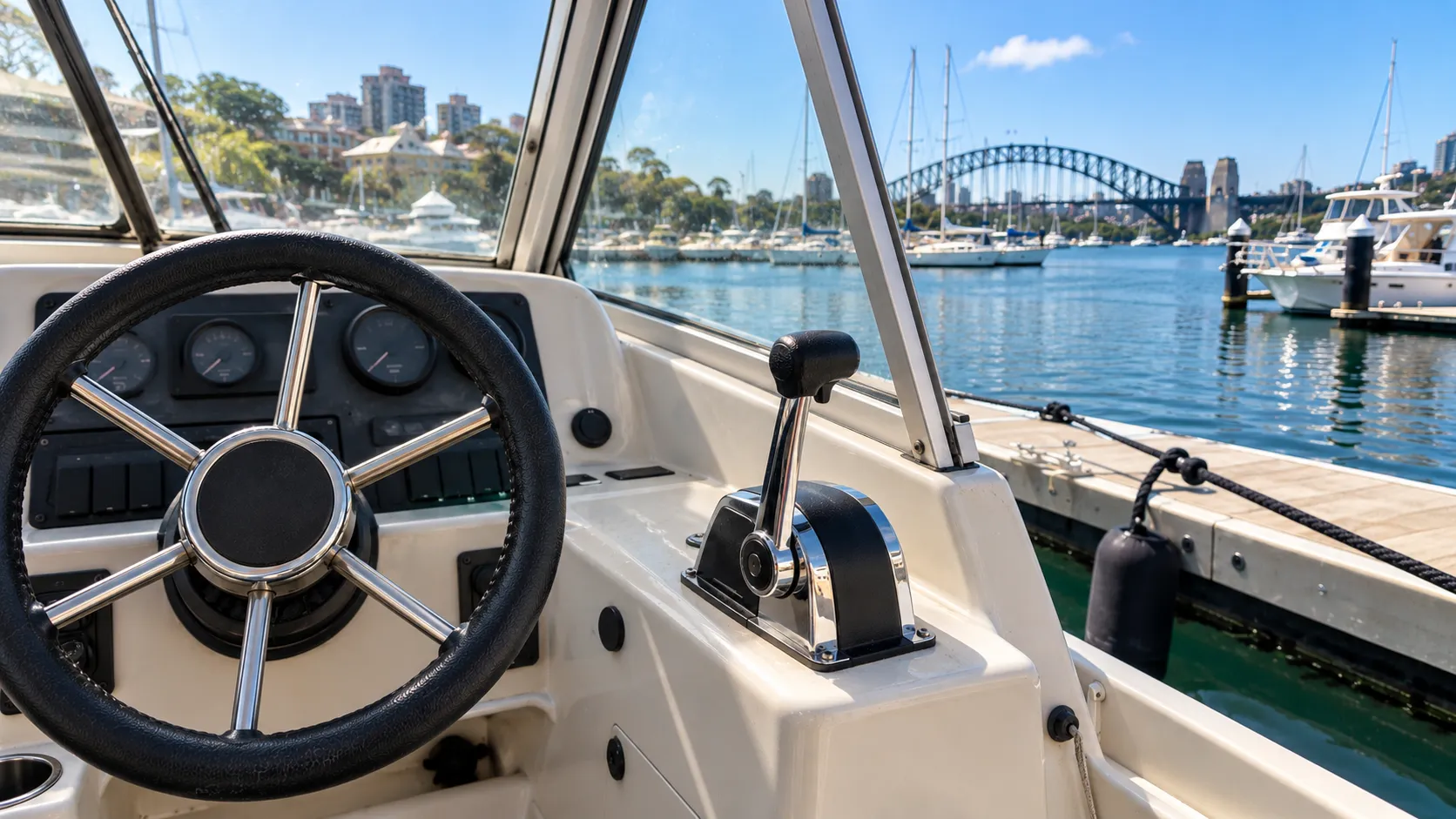
Poor engine response is different. The drive may engage promptly, but the engine then bogs down, runs roughly or struggles to produce the expected thrust as the throttle increases. An engine that stalls under load may have an engine-related fault rather than a transmission problem.
Boat movement alone cannot confirm whether the drive has engaged. Wind, current and momentum can mask the response at low speeds. Describe what happened at the controls, what you heard and how the boat moved rather than assuming a component has failed.
If the main symptom occurs after propulsion begins, why an engine loses power when accelerating provides further information about that separate issue.
A boat that hesitates when reverse is selected may engage forward normally, or the problem may affect both directions. This difference helps a mechanic narrow down the investigation, although it does not identify the cause by itself.
Forward and reverse selection may involve different control movements or internal components, depending on the propulsion system. A change in lever feel, including stiffness or unusual free movement, can also provide useful diagnostic information.
Tell the mechanic whether the issue has always affected one direction or has recently started occurring in both. Avoid repeatedly shifting between gears to test whether the other direction still works, as an inconsistent response can make manoeuvring unpredictable.
A delay that occurs after a cold start may indicate a different issue from one that develops after the machinery warms up. Temperature can affect fluid behaviour in applicable hydraulic systems and may reveal faults that are less noticeable under other operating conditions.
However, cold-versus-warm behaviour does not establish a diagnosis. Its significance depends on the transmission design, operating specifications and other symptoms.
Use observations from trips already completed to explain when the delay occurred, whether it happened during the first gear selection or later in the trip and whether the problem has become more frequent. There is no need to operate the boat again to compare temperatures.
Delayed engagement can originate in the helm controls, the transmission or another part of the drive arrangement. Similar symptoms do not necessarily require the same repair, which is why a mechanic needs to identify the installed equipment before recommending work.
An inboard hydraulic transmission, for example, does not operate in the same way as every outboard or sterndrive gearbox. The inspection should follow the manufacturer's specifications and the procedures appropriate to the system.
Moving the helm lever does not guarantee that the gear selection reaches the drive correctly. On mechanically controlled systems, worn cables, restricted movement or damaged linkages may prevent the selector from reaching its intended position. Electronic controls require different checks to confirm that commands are being received and carried out correctly.
If the mechanism does not move as intended, the drive may fail to engage properly or may not select the requested position. Incorrect adjustment can also affect neutral selection, so changing cable settings without the correct procedure may introduce additional problems.
Assessments check whether the control input produces the required movement or command at the drive. Mention any recent change in lever feel or control work completed before the symptoms appeared, as this history can determine where the investigation should begin.
Some inboard marine transmissions use hydraulic pressure to apply internal clutch packs. If the required pressure is not available, the clutches may not apply as intended, potentially causing delayed or incomplete engagement.
Possible causes include incorrect fluid levels, degraded or unsuitable fluid, leaks, pump faults and internal sealing problems. These possibilities must be assessed against the requirements of the installed transmission rather than treated as a universal explanation for delayed engagement.
Not every marine gearbox uses hydraulic clutch engagement, and lubricant requirements and checking procedures vary by model. Adding fluid or substituting a different product without identifying the equipment can create further problems.
A mechanic may need to check fluid condition, inspect for leaks and test pressure against the manufacturer's specifications. Service records can also establish if the correct maintenance has been carried out. The boat servicing guide explains how servicing checks vary according to the machinery fitted.
Wear or damage inside the drive can also cause hesitant, incomplete or harsh engagement. The components involved depend on the propulsion system, so delayed engagement alone is not enough to identify a failed part.
Unusual noises, jolting and changes in behaviour with temperature can help direct further testing, but none confirms internal damage on its own. A mechanic may need to carry out additional diagnostic checks before determining whether the problem involves an adjustment, a serviceable component or internal transmission wear.
When discussing repair options, ask how the mechanic intends to distinguish a control fault from an internal problem, what checks are required and if additional diagnostic work needs approval. If dismantling is recommended, request an explanation of the initial findings and why further inspection is necessary before proceeding.
Unpredictable propulsion is a safety concern when manoeuvring close to a berth, another vessel or people in the water. The priority is to avoid further use until the fault has been assessed, rather than trying to compensate for the delay at the controls.
A newly developed hesitation deserves attention even if engagement eventually occurs. Grinding, a harsh jolt or a loss of propulsion makes prompt professional assessment especially important.
Adding throttle while waiting for the drive to engage can leave the engine running faster when propulsion finally arrives. This may cause a sudden surge instead of the controlled movement intended, leaving little time to react in a confined marina or berth.
Repeatedly moving between neutral, forward and reverse is not a reliable way to resolve the problem. Depending on the fault, repeated attempts may place additional stress on the drive or produce another unexpected response. Successful engagement after several attempts does not mean the boat is safe to keep using.
Do not attempt control adjustments, transmission repairs or dismantling simply to get through the next outing. Some boat repairs are best left to marine professionals, particularly when an incorrect adjustment could affect propulsion or neutral selection.
If the boat is safely secured, leave it out of service until it has been inspected. Do not take it out to see whether the delay disappears or assume that forward or reverse remains dependable because only one direction appears affected. The NSW Government’s vessel maintenance guidance recommends fixing faults before heading out on the water.
If the problem develops while underway, prioritise the immediate safety of everyone aboard and seek assistance for the circumstances. Avoid assuming that the trip can be completed safely simply because the engine continues to run. A functioning engine does not guarantee dependable propulsion.
When contacting a boat mechanic in Sydney, explain that gear engagement is unreliable before arranging an inspection. Confirm whether the boat can be assessed at its current berth or needs to be transported, as access, recovery and repair arrangements depend on the circumstances and the services available.
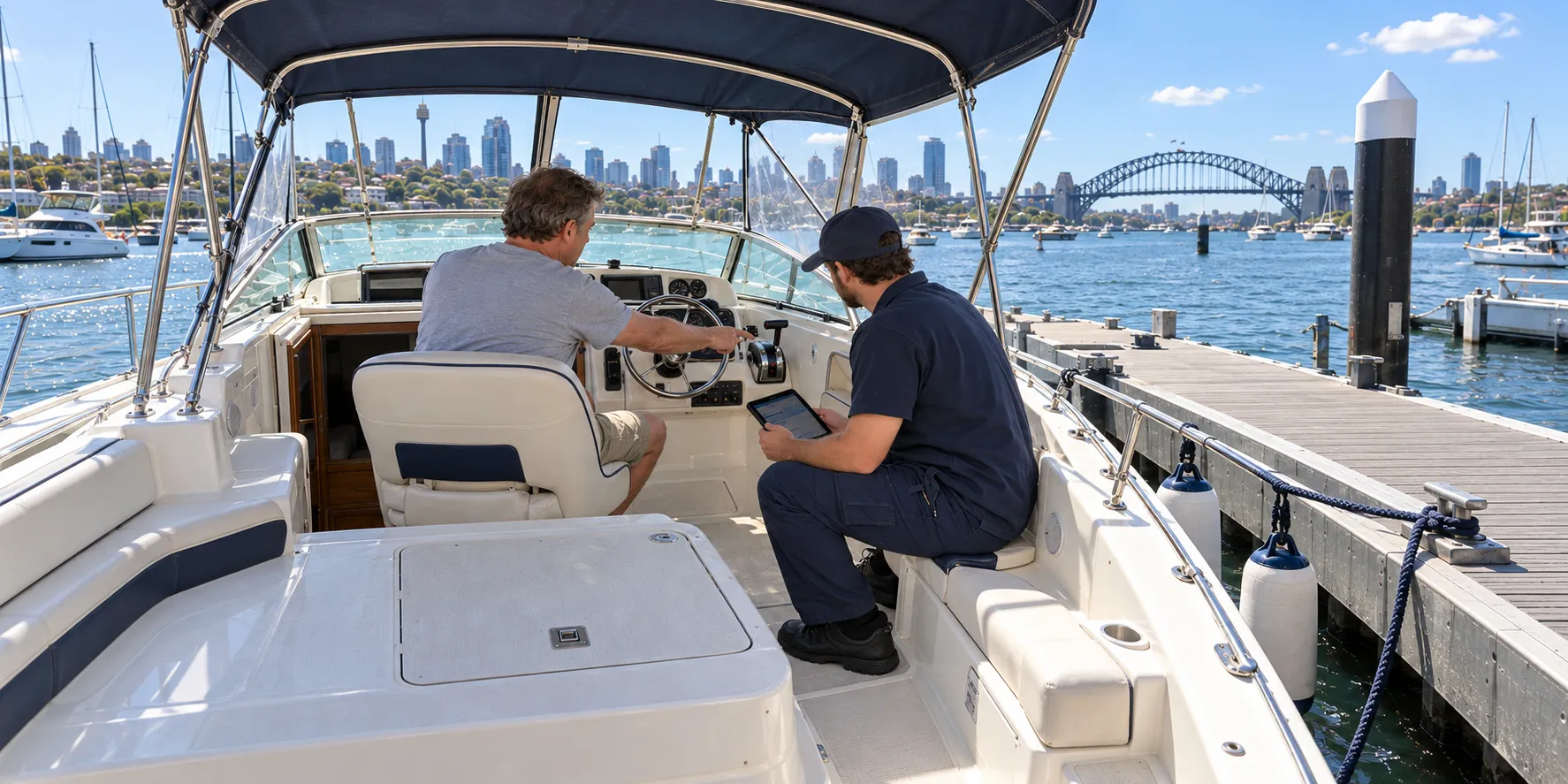
Clear information helps a mechanic determine which checks are appropriate. When arranging an inspection, provide the following details where available:
Distinguish what you observed from what you suspect. For example, describe a delay between selecting reverse and feeling propulsion rather than concluding that the gearbox has failed.
Before approving repairs, ask what the initial inspection includes, whether further diagnostic work may be required, how additional costs will be authorised and what findings will be provided. These details establish a plan for assessing the fault and deciding on the repair. The ACCC explains consumer guarantees for repair services, including the requirement for services to be carried out with due care and skill.
Delayed boat gearbox engagement can stem from control problems, hydraulic pressure issues in applicable transmissions or internal wear. Avoiding repeated gear changes and further use when propulsion is unreliable can also reduce the risk of an unexpected movement during manoeuvring. Hume Marine can be contacted to discuss marine servicing and repair requirements. Providing clear symptoms, the affected gear and any recent changes can set up the next steps towards restoring reliable propulsion.

In 45 years of maintaining our Classic Formula 233......Ian, Scott, Patrick and the team from HUME MARINE are by far the best Marine Engineers we have ever encountered.
Our recent re-powering project involved far more than a standard engine installation, using many custom parts and applying bespoke engineering. Only an organisation like HUME MARINE with the experience and expertise we required was capable of thinking "outside the box" to make it all work.
And work it did! Thank you to Ian and his team for making our dream Formula 233 become a reality.
Fishfinder Charters have known Hume Marine for 20 years plus, Ian and his team conduct there business with total professionalism and reliability, All jobs are treated with care, good diligence and consideration toward time and cost.
He has recently installed our new Cummins main engine to Fishfinder! beautiful Job! every detail was checked comprehensively and double checked to meet survey requirements to conform with safety and reliability. We have no issues with recommending Hume Marine to service your marine mechanical needs.
We received the most extraordinary service, despite the shipyard being busy.
Communication was efficient, effective & with the our specific needs at the forefront.
All staff at Hume Marine were cooperative & helpful with backup & offers of support for us, with our new yacht was above & beyond.
We are extremely grateful to Ian & all his staff for the outstanding service & excellent workmanship at White Bay 6.
Cheerful, happy & willing to go the extra mile. Cannot thankyou enough!
Ian has looked after Sea Squire for many years including installation of a new Steyr diesel motor & a complete mechanical refit. He is always available & offers practical solutions to any issue.
Ian and Scott Hume, along with Anthony (apprentice), recently completed a FULL service onboard our 45' support craft, "The UTE", owned and operated by Iain Murray, and the sailing Team "andoo Comanche". This full service was just a fantastic job, which high levels of enthusiasm and curiosity were on show. They were genuine in their actions, as well as very skilful, and had the whole of job completed in 5 hours, 2 x main engines, 2 x transmissions, all fuel filtration, all lub-oil filtration, seawater impellers, as well as cleaning of machinery space, as they completed. This was a great job, completed by good old-fashioned service, I/we will not use anyone else for our service reliability requirements.
Ian Hume has serviced my boat Palm Beach 38 for a number of years. I have always found him to be responsive and thorough. His knowledge of the Steyr engines and the PB have been very helpful when troubleshooting and fixing problems.
Ian and the guys at Hume Marine have looked after my Caribbean 26 for around 10 years. I literally ran up over 2000 hours of game fishing off Sydney and the boat always got back me back to marina without ever once having to it get towed.
Ian and his crew completely looked and after it, regular engine servicing, engine and stern drive repairs, antifouling, electrical and general boat maintenance.
Great guy, easy to deal with and offers a reasonable price.Thoroughly recommend Hume Marine to anyone who requires boat engine maintenance, repairs, antifouling on their petrol or diesel boats.
Hume Marine has been the best company so far I've used. Wouldn't use anybody else. Do yourself a favour and use ian for your next service.
Ian and the team from Hume Marine have been looking after our boat since returning to Sydney Harbour in 2016.
As the recommended Sydney based Steyr engine expert Ian has demonstrated great knowledge and expertise in maintaining our vessel.
Not only has Ian proven himself to be reliable and trustworthy his advice has always given us great confidence in his work.
Christina and Sharon
Tally Ho
Ian has been servicing my boats for 18 years now and I highly recommend him, he has always been trustworthy and reasonably priced.


