
A boat engine compression test provides a useful snapshot of engine health by showing how effectively each cylinder builds and holds pressure. The results can reveal potential issues affecting starting, power, fuel efficiency and overall reliability.
Hume Marine provides marine engine servicing and diagnostics to help identify mechanical issues that may not be obvious during normal operation. Compression testing can form part of a broader assessment when an engine shows signs of wear or performance changes.
Knowing what compression readings mean, what causes low or uneven results and when further testing is needed can help guide maintenance and repair decisions. A marine diesel mechanic in Sydney can use these findings to assess engine condition and identify potential problems before they develop into more serious faults.
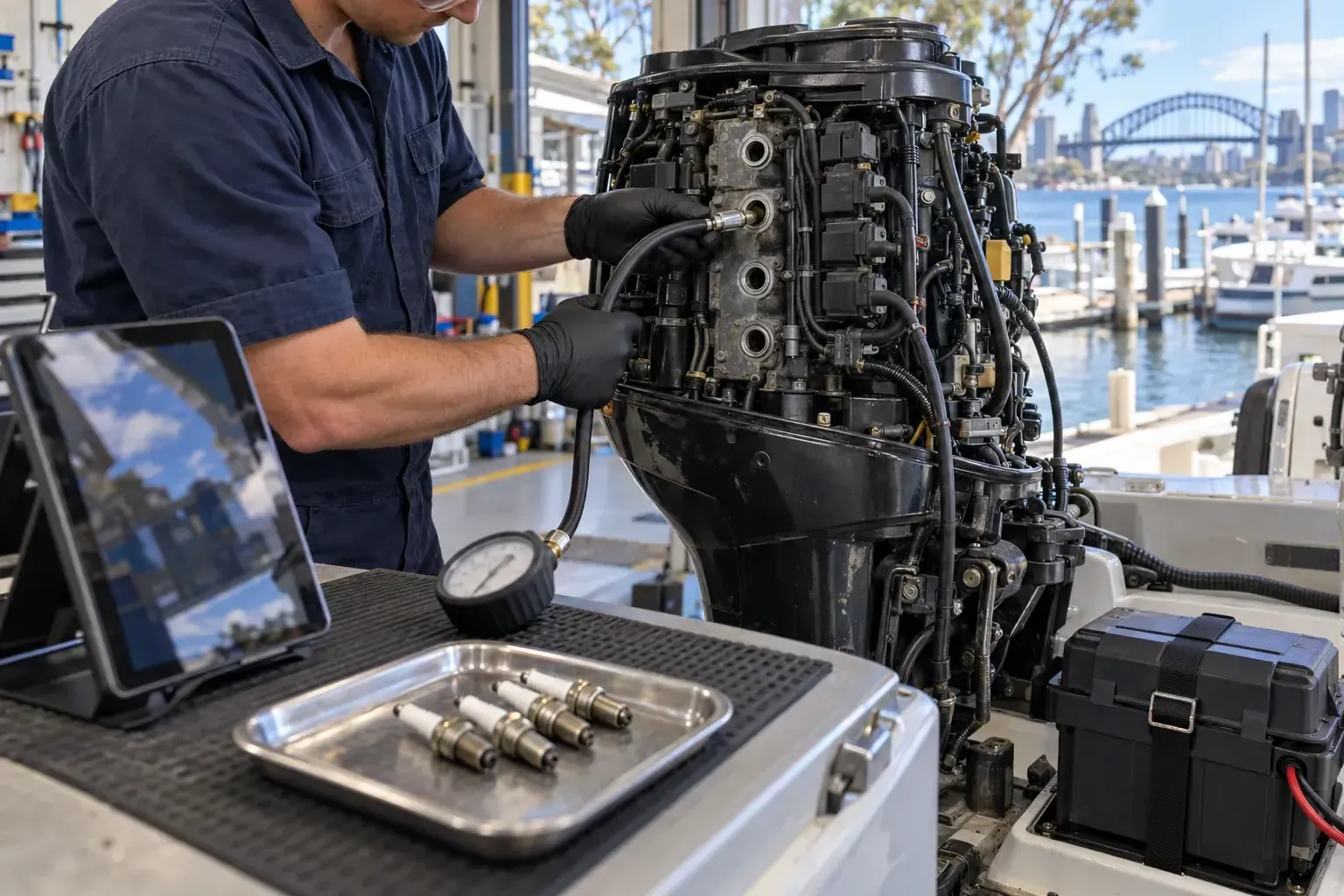
A boat engine compression test measures how effectively each cylinder builds and holds pressure during the compression stroke. The readings provide insight into the condition of the combustion chamber, piston rings, cylinder walls and valves, helping identify mechanical problems that may contribute to hard starting, rough running or loss of power.
The test measures both the pressure produced in each cylinder and how evenly the cylinders perform. Readings are usually recorded in PSI or kPa and are assessed against the specifications for the particular engine.
The pressure produced by each cylinder provides an indication of how well it is sealing. Petrol marine engines may commonly produce readings around 120-180 PSI, while diesel engines produce substantially higher pressures. These figures are only broad references, as the correct range varies between engines.
Cylinder balance is also important. A noticeably lower reading in one cylinder can indicate a localised problem like a leaking valve, worn piston ring, damaged cylinder or head gasket fault. A low but relatively even result across several cylinders may point towards broader engine wear or another issue affecting the engine as a whole.
If a cylinder produces an unusually low reading, a wet compression test may provide additional information. An increase after adding a small amount of oil can suggest piston ring or cylinder wall wear, while little change may point towards a valve or head sealing problem.
Low or uneven compression can indicate a problem with the engine’s internal sealing and may contribute to hard starting, rough running, engine power loss, and increased fuel or oil consumption. The pattern of the readings is important because low compression across all cylinders can indicate a different problem from one cylinder performing worse than the others.
When compression is consistently low across all cylinders, the cause is more likely to affect the engine as a whole. Possible causes include:
Low readings combined with symptoms such as poor starting, reduced power, increased oil consumption or excessive crankcase fumes can provide further evidence of internal wear.
When one or two cylinders produce substantially lower readings than the others, the problem is more likely to be localised. Possible causes include:
If a low reading is confirmed, a leak-down test can help identify where the pressure is escaping and whether the problem is associated with the rings, valves or head gasket.
A boat engine compression test can be used as both a maintenance check and a diagnostic tool when engine performance changes. The appropriate timing depends on the engine type, operating hours, age, service history and recommended service intervals.
Compression testing can be useful in the following situations:
These symptoms can also result from fuel, ignition, cooling or electrical faults, so compression testing is best considered alongside other diagnostic checks.
Compression testing mainly assesses cylinder sealing and internal mechanical condition. A healthy compression result does not rule out problems with the fuel, ignition, cooling, lubrication or electrical systems, all of which can cause hard starting, rough running or loss of power.
Depending on the symptoms, further checks may include a leak-down test, fuel pressure and injector testing, ignition checks, battery and charging system tests, or inspections of the cooling and lubrication systems.
Compression testing is therefore most useful as one part of a broader diagnostic process. The results provide evidence about the engine's mechanical condition but should not be treated as a complete diagnosis on their own.
A boat engine compression test measures the pressure produced by each cylinder while the engine is cranked. The correct equipment and procedure depend on the engine type and configuration. A mechanic can select the appropriate gauge, adapters and testing method for the engine being assessed.
The basic process involves:
Recording the readings and relevant test conditions creates a useful baseline for future servicing and makes changes in cylinder pressure easier to track.
Normal engine compression varies between boat engines, so there is no single PSI figure that applies to every model. Petrol marine engines may commonly produce readings around 120-180 PSI, while diesel engines produce substantially higher pressures. The specifications for the engine should remain the primary reference.
Consistency between cylinders is also important. Readings should be reasonably close to one another, although the acceptable difference varies between engines. A noticeably lower cylinder can indicate a localised sealing problem, while low but relatively even readings may suggest broader wear or another issue affecting the engine.
Test conditions also need to be reliable for the results to be meaningful. Temperature, cranking speed, battery condition, gauge accuracy and testing procedure can all affect the readings.
Compression readings differ between diesel and petrol boat engines because they use different compression ratios and combustion systems. Diesel engines normally produce much higher compression pressures, so a PSI figure that may be suitable for a petrol engine cannot be used to assess a diesel engine.
Petrol marine engines produce lower compression readings than diesel engines, with some commonly falling around 120-180 PSI. The correct range varies between models and a lower reading in one cylinder may indicate a valve, piston ring, cylinder or head gasket problem.
Diesel engines produce substantially higher compression because the compressed air must reach a temperature that allows the fuel to ignite. Testing may require specialised equipment and adapters, where access is through an injector or glow plug opening.
Low diesel compression can contribute to difficult starting, reduced power or excessive smoke, but fuel injection and other engine systems should also be considered when diagnosing these symptoms.
The results from diesel and petrol engines should be assessed separately using the appropriate specifications and testing equipment. A marine diesel professional can use the correct equipment and procedure to assess diesel compression accurately.
A compression test result can be influenced by the engine's condition and the way the test is performed. Temperature, cranking speed, battery condition, equipment and testing procedure can all affect the pressure recorded at the gauge.
For reliable results, each cylinder should be tested under consistent conditions and according to the engine manufacturer’s instructions.
Compression readings can vary with engine temperature as pistons, rings and cylinder walls expand during warm-up. Some engines require testing at normal operating temperature, while others specify a cold test.
Cranking speed also needs to remain consistent. A weak marine battery, poor electrical connection or faulty starter can reduce cranking speed and produce lower readings. Following the correct procedure and maintaining adequate battery condition helps produce more reliable results.
On some petrol engines, the throttle and intake configuration can affect the amount of air entering the cylinders during cranking. A restricted throttle may produce artificially low readings.
The correct throttle position and intake setup should follow the engine's testing procedure, as diesel engines may have different requirements.
The compression gauge, hose and adapter must be in good condition and properly sealed. A leaking connection, incorrect adapter or faulty gauge can allow pressure to escape and produce an inaccurate reading. Diesel engines may require specialised adapters for injector or glow plug openings. Experts can use suitable equipment and testing procedures for the engine being tested.
Each cylinder should also be tested using the same number of compression strokes, cranking duration and general procedure. This makes the results easier to compare and reduces the risk of testing variations being mistaken for an engine fault.
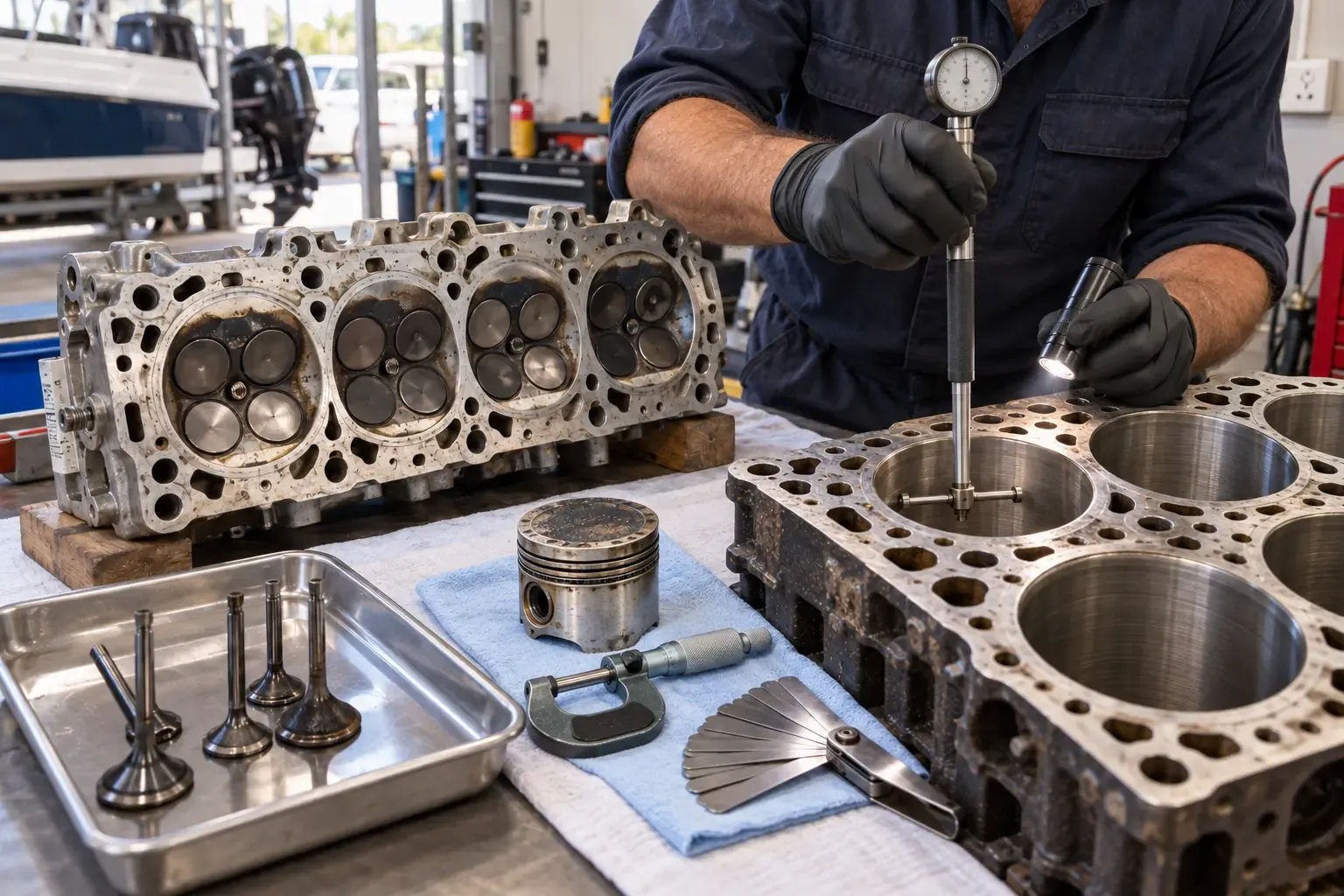
Yes. A compression test can provide useful evidence of engine wear by showing how well the cylinders build and retain pressure. Worn piston rings, cylinder walls or valves can reduce compression, while a noticeable difference between cylinders may indicate that one cylinder has more advanced wear than the others.
However, a single compression test cannot determine the overall age or remaining life of an engine. The results are more useful when compared with previous readings and other signs like increased oil consumption, crankcase blow-by, reduced power, harder starting or excessive exhaust smoke.
Repeated compression tests can help track changes. A gradual decline across several tests or a cylinder that increasingly falls behind the others may indicate developing internal wear and provide a reason for further investigation.
After a boat engine compression test, the results should be reviewed and compared across all cylinders. A consistent result within the expected range can provide a useful baseline for future servicing, while low or uneven readings may require further investigation.
The usual next steps are:
Keeping the results also creates a baseline for future tests, making it easier to monitor changes in engine condition over time.
A boat engine compression test provides valuable insight into cylinder sealing, valve and piston ring condition and potential internal wear. When combined with engine symptoms, service history and other diagnostic checks, the results can help identify developing problems and guide decisions about maintenance or repairs.
Hume Marine can use compression testing as part of a broader marine engine assessment to monitor engine condition and investigate performance concerns. Regular testing can help detect changes early, support reliable operation on the water and reduce the risk of more costly engine problems.

In 45 years of maintaining our Classic Formula 233......Ian, Scott, Patrick and the team from HUME MARINE are by far the best Marine Engineers we have ever encountered.
Our recent re-powering project involved far more than a standard engine installation, using many custom parts and applying bespoke engineering. Only an organisation like HUME MARINE with the experience and expertise we required was capable of thinking "outside the box" to make it all work.
And work it did! Thank you to Ian and his team for making our dream Formula 233 become a reality.
Fishfinder Charters have known Hume Marine for 20 years plus, Ian and his team conduct there business with total professionalism and reliability, All jobs are treated with care, good diligence and consideration toward time and cost.
He has recently installed our new Cummins main engine to Fishfinder! beautiful Job! every detail was checked comprehensively and double checked to meet survey requirements to conform with safety and reliability. We have no issues with recommending Hume Marine to service your marine mechanical needs.
We received the most extraordinary service, despite the shipyard being busy.
Communication was efficient, effective & with the our specific needs at the forefront.
All staff at Hume Marine were cooperative & helpful with backup & offers of support for us, with our new yacht was above & beyond.
We are extremely grateful to Ian & all his staff for the outstanding service & excellent workmanship at White Bay 6.
Cheerful, happy & willing to go the extra mile. Cannot thankyou enough!
Ian has looked after Sea Squire for many years including installation of a new Steyr diesel motor & a complete mechanical refit. He is always available & offers practical solutions to any issue.
Ian and Scott Hume, along with Anthony (apprentice), recently completed a FULL service onboard our 45' support craft, "The UTE", owned and operated by Iain Murray, and the sailing Team "andoo Comanche". This full service was just a fantastic job, which high levels of enthusiasm and curiosity were on show. They were genuine in their actions, as well as very skilful, and had the whole of job completed in 5 hours, 2 x main engines, 2 x transmissions, all fuel filtration, all lub-oil filtration, seawater impellers, as well as cleaning of machinery space, as they completed. This was a great job, completed by good old-fashioned service, I/we will not use anyone else for our service reliability requirements.
Ian Hume has serviced my boat Palm Beach 38 for a number of years. I have always found him to be responsive and thorough. His knowledge of the Steyr engines and the PB have been very helpful when troubleshooting and fixing problems.
Ian and the guys at Hume Marine have looked after my Caribbean 26 for around 10 years. I literally ran up over 2000 hours of game fishing off Sydney and the boat always got back me back to marina without ever once having to it get towed.
Ian and his crew completely looked and after it, regular engine servicing, engine and stern drive repairs, antifouling, electrical and general boat maintenance.
Great guy, easy to deal with and offers a reasonable price.Thoroughly recommend Hume Marine to anyone who requires boat engine maintenance, repairs, antifouling on their petrol or diesel boats.
Hume Marine has been the best company so far I've used. Wouldn't use anybody else. Do yourself a favour and use ian for your next service.
Ian and the team from Hume Marine have been looking after our boat since returning to Sydney Harbour in 2016.
As the recommended Sydney based Steyr engine expert Ian has demonstrated great knowledge and expertise in maintaining our vessel.
Not only has Ian proven himself to be reliable and trustworthy his advice has always given us great confidence in his work.
Christina and Sharon
Tally Ho
Ian has been servicing my boats for 18 years now and I highly recommend him, he has always been trustworthy and reasonably priced.


