
Regular engine servicing is essential for keeping a boat reliable, efficient and ready for the water. Hume Marine helps boat owners understand that the right service interval depends on more than a fixed timeframe. Engine type, operating hours, boating conditions and how the vessel is stored can all influence when maintenance is required. Working with an experienced marine mechanic in Sydney can help ensure servicing is matched to the engine’s actual use, reducing the risk of unexpected breakdowns, costly repairs and premature wear.
This article explains the key factors that determine how often a boat engine should be serviced and what a typical maintenance schedule may involve throughout the year. It covers the difference between hours-based and calendar-based servicing, important stages such as initial run-in checks, annual servicing and mid-season inspections, and the warning signs that may indicate an engine needs attention sooner than expected. Understanding these considerations can help boat owners establish a practical servicing routine that supports reliable performance and longer engine life.
Service intervals vary significantly between engine types and how they are used. Skippers should consider both engine hours and calendar time because oil, fuel and cooling systems can deteriorate with age as well as use. The guidelines below provide general benchmarks for recreational boats, but the service schedule in the owner’s manual should always take priority.
The following intervals are general guides rather than universal requirements. Servicing recommendations can vary considerably between manufacturers, engine models and operating conditions, so owners should always follow the schedule specified for their particular engine.
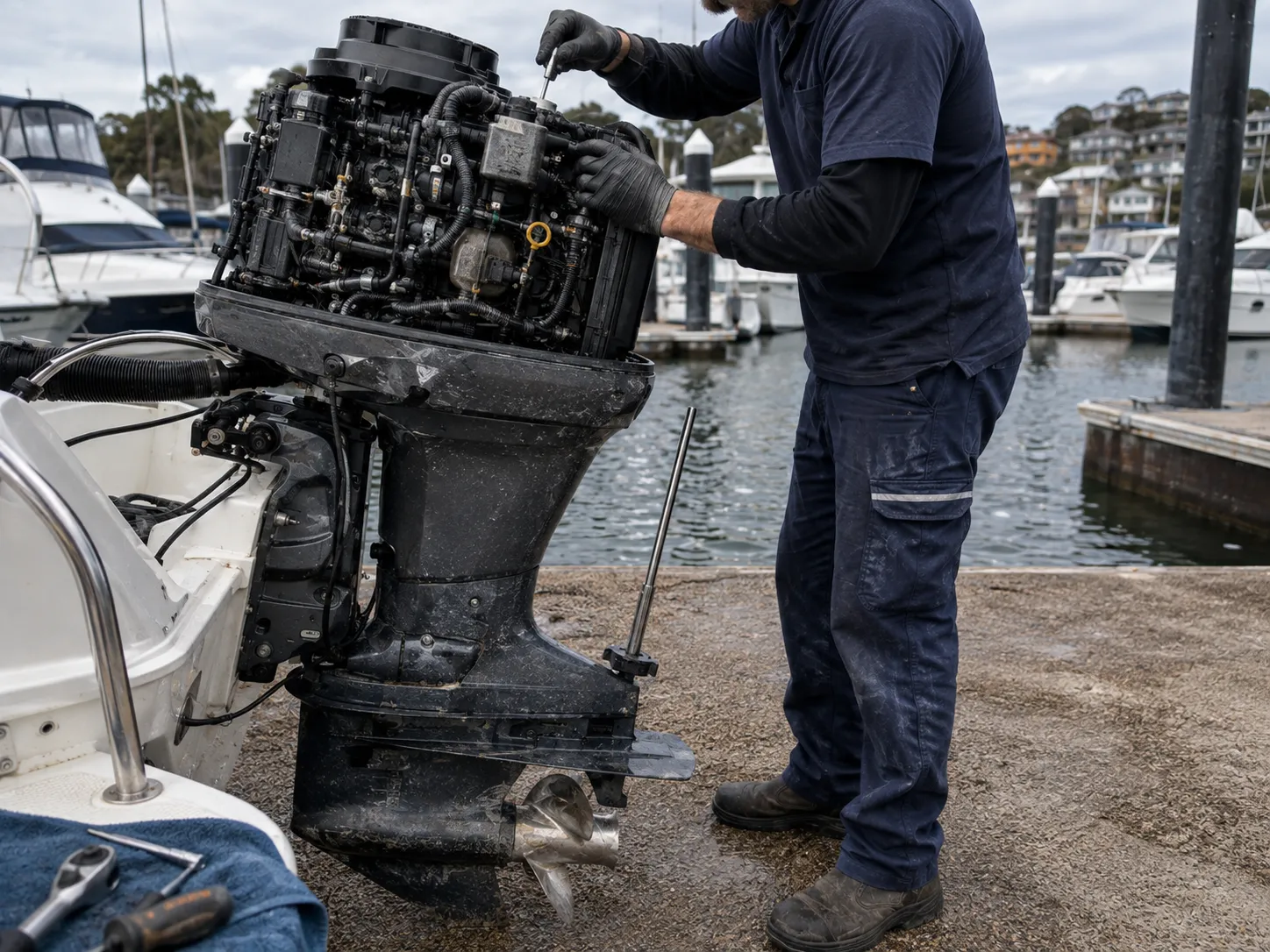
Many modern outboards have an initial service requirement within the first few months or after a specified number of operating hours, followed by regular servicing commonly based on operating hours or a yearly interval, whichever comes first. A frequently used benchmark for recreational outboards is around 100 hours or 12 months, although exact requirements vary by manufacturer and model.
High-use engines, such as those on fishing boats that run several days each week, may benefit from an intermediate inspection during peak season. This can include checking the oil level on 4-strokes, visually inspecting fuel filters and examining the propeller and gearcase for signs of damage or wear.
In addition to full services:
Saltwater use and frequent shallow-water operation can justify more frequent inspections because these conditions may accelerate corrosion, contamination and cooling-system wear.
Many recreational inboard engines are serviced according to both operating hours and elapsed time, with 100 hours or 12 months being a common benchmark. Some diesel engines may have longer service intervals where the manufacturer specifically permits them. A typical service may include oil and filter changes, fuel filter replacement, belt inspection and cooling-system checks. Understanding what a boat service includes can help owners see how these individual checks contribute to engine reliability and safety.
High-load operation, such as extended cruising at higher RPM, towing skiers or operating heavy displacement hulls, places additional strain on lubrication and cooling systems. In these conditions, following the shorter end of the manufacturer’s recommended service range may help reduce unnecessary wear.
Diesel engines can also be particularly sensitive to fuel contamination. Boats that spend long periods idle should still have their fuel systems and filters inspected at the recommended intervals because condensation in tanks can contribute to water contamination, microbial growth and sludge.
Sterndrives and pod drives combine inboard power with underwater driveline components. These systems typically require regular engine servicing as well as separate inspection and maintenance of the driveline according to manufacturer recommendations.
Typical driveline work may include gear oil replacement, bellows inspection, anode renewal and alignment checks. Boats stored in the water full time may require closer attention because constant immersion can increase exposure to corrosion and marine growth.
Regular maintenance is particularly important for sterndrives because deteriorated bellows, seals or corroded components can potentially allow water intrusion and lead to significant repair costs.
Service intervals printed in an engine manual provide the foundation for a maintenance schedule, but operating conditions can mean some components need attention more frequently. How hard the engine works, how often it runs and the environment in which it operates can all influence wear, contamination and corrosion.
Understanding what accelerates these processes can help owners establish a realistic schedule for regular engine maintenance. In some situations, scheduled annual servicing may be sufficient. In others, particularly where a boat is used heavily or operates in demanding conditions, certain items such as oil, filters, cooling components and anodes may need to be inspected more frequently.
One of the main variables is simply how much the engine runs. Engine manufacturers commonly specify servicing in operating hours, elapsed time or both, such as a particular number of hours or annually, whichever comes first. High-hour use can therefore trigger servicing even when only a short amount of calendar time has passed.
How those hours are accumulated also matters. Constant low-speed trolling, heavy towing of skiers or wakeboarders and long periods at high throttle can all place additional load on an engine.
Extended idling and trolling can contribute to issues such as carbon build-up or fuel dilution in some engines, while prolonged high-load operation can increase stress on lubrication and cooling systems. The manufacturer’s recommendations for severe or heavy-duty operating conditions should be followed where applicable.
Saltwater environments are generally more demanding on marine equipment than freshwater because salt can promote corrosion in cooling passages, linkages, electrical connections and external fittings. Boats kept in the water or used frequently in saltwater may therefore benefit from more frequent inspection of anodes, flushing systems and corrosion-prone components.
Understanding how saltwater affects a boat engine can help owners prioritise flushing, corrosion protection and regular inspection of vulnerable components. Fine silt, sand and muddy water can also affect maintenance requirements. Engines used in shallow estuaries or around sandy bars may experience faster wear in water pumps, restriction of cooling-water intakes and a greater risk of overheating if cooling components are not monitored.
Humid coastal conditions can also increase the potential for condensation in fuel tanks. Water contamination may contribute to microbial growth in some fuel systems, making regular fuel-filter and water-separator inspections particularly important.
Engines that sit unused for long periods still require preventative maintenance. Fuel can degrade over time, while hoses, seals, batteries and other components can deteriorate even when an engine is not operating.
Following the manufacturer’s storage or lay-up procedure can help reduce these risks. Depending on the engine and fuel system, this may involve fuel management, battery maintenance, flushing, corrosion protection and inspections before returning the boat to regular use.
Fuel quality also has a direct effect on reliability. Contaminated fuel can restrict filters and potentially damage fuel-system components such as injectors and pumps. Using clean fuel from reputable suppliers and replacing filters at the recommended intervals can help reduce the likelihood of fuel-related problems.
Where ethanol-blended fuel is used, owners should also follow the engine manufacturer’s fuel recommendations because moisture absorption and prolonged storage can create additional fuel-quality concerns.
An overdue service does not always result in an immediate mechanical failure. More commonly, an engine may begin showing gradual changes in how it starts, runs, sounds or performs.
These symptoms do not automatically mean that servicing is overdue, as mechanical or electrical faults can occur even on well-maintained engines. However, any noticeable change from normal operation should be investigated, particularly when the engine is approaching or has passed its recommended service interval.
Hard starting can be an indication that an engine needs attention. An engine that previously started promptly but now cranks for longer, stalls shortly after starting or requires repeated attempts may have issues involving fuel quality, filters, spark plugs, batteries or other ignition and fuel-system components.
On the water, maintenance or mechanical problems may also appear as reduced performance. Common warning signs include:
A noticeable increase in fuel consumption can also justify further investigation. Fouled spark plugs, fuel-system restrictions, propeller problems, hull condition and a range of other mechanical factors can all affect efficiency.
A healthy marine engine should generally operate with a consistent sound and predictable level of vibration. New or worsening noises should be investigated rather than assumed to be a normal consequence of age.
Knocking, rattling, ticking or metallic scraping can have numerous causes, ranging from loose components and worn belts to lubrication or internal mechanical issues. High-pitched squeals may be associated with slipping belts, bearings or other rotating components.
Increased vibration at certain RPM ranges can also indicate issues such as propeller damage, worn engine mounts, driveline misalignment or fouled running gear. Leaving these problems unresolved can place additional stress on surrounding components.
Strong fuel smells in the bilge, persistent fuel odours while running, or burnt oil and rubber smells should also be investigated promptly. These symptoms may indicate leaking fuel lines, deteriorated hoses, fluid leaks or overheating components and can present safety concerns as well as mechanical risks.
Many newer marine engines use electronic monitoring systems that can alert the operator to particular faults or maintenance requirements. The exact warnings available vary between manufacturers, models and engine ages, so owners should understand the indicators fitted to their specific engine.
Check-engine warnings, overheat alarms, low oil-pressure alerts and other abnormal indications should not be ignored. Where a maintenance reminder system is fitted, servicing should be completed according to the manufacturer’s instructions rather than simply resetting or dismissing the reminder.
Analogue and digital gauges can also provide useful warning signs. Changes in normal operating temperature, oil pressure, charging voltage or engine RPM at a familiar cruising speed may indicate a mechanical problem that requires inspection.
Visual checks around the engine bay can reveal further signs that maintenance is required. These may include:
Boat owners should also perform routine vessel maintenance checks covering the engine, fuel lines, electrical system, battery, propeller and cooling-water circulation before heading onto the water. These signs do not necessarily confirm that a scheduled service has been missed, but they are good reasons to arrange an inspection, especially when combined with high operating hours or an overdue service date.
Delaying scheduled servicing can allow wear, corrosion and contamination to develop unnoticed. Problems that may have been relatively straightforward to address during routine maintenance can become more expensive if they are allowed to progress.
Regular servicing is designed to address the way marine engines and driveline components deteriorate in demanding operating environments. When recommended intervals are repeatedly stretched or skipped, fluids can lose their protective properties, filters can become restricted and developing faults may go unnoticed.
Engine oil and filters play an important role in protecting internal components from wear and contamination. As oil ages, its condition can deteriorate due to heat, combustion by-products, fuel dilution and moisture.
If lubrication quality becomes poor, internal components may be exposed to increased friction and wear, potentially affecting:
In some cases, relatively minor maintenance issues can develop into expensive mechanical repairs if they are left unresolved.
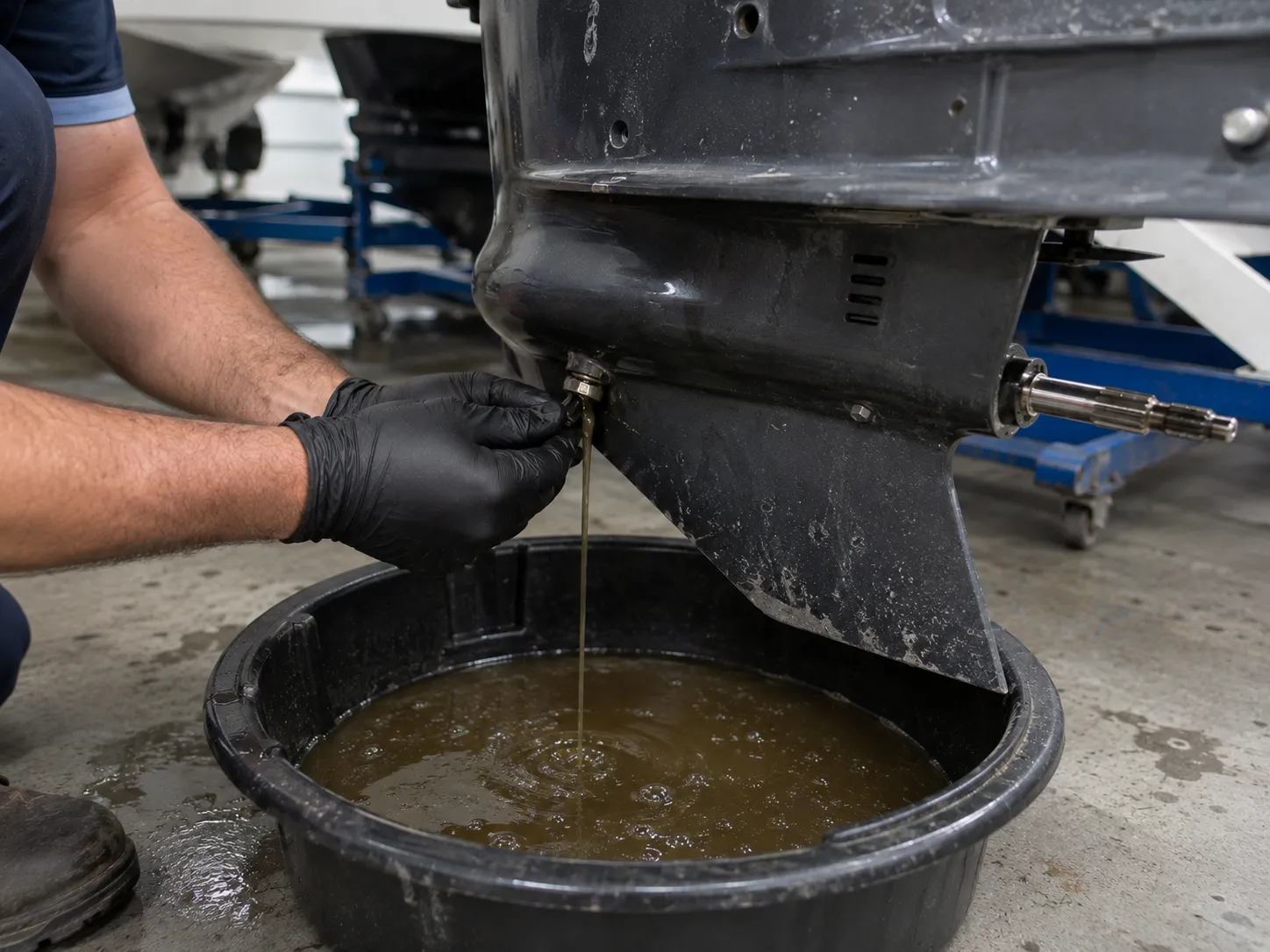
Gearcase oil in outboards and sterndrives also requires regular inspection and replacement according to manufacturer recommendations. Milky or contaminated gear oil may indicate water intrusion, which can damage gears and bearings if the underlying problem is not addressed.
Where an engine requires periodic valve-clearance, timing-belt or related inspections, these should also be completed according to the specified service schedule. Ignoring manufacturer requirements can increase the risk of poor performance or mechanical damage.
Marine engines operate in environments where corrosion is a constant concern, particularly when used in saltwater. Regular servicing creates opportunities to identify developing corrosion before it affects cooling passages, electrical connections or structural components.
Cooling systems are particularly important because restricted water flow or deteriorated coolant can contribute to overheating.
In closed-cooling inboard and sterndrive systems, coolant should be replaced at the manufacturer’s specified interval so it continues to provide appropriate corrosion and freeze protection. In raw-water-cooled engines and outboards, salt, sand and scale can restrict cooling passages, thermostats and water pumps if the system is not properly maintained.
Fuel systems can also suffer when maintenance is delayed. Filters that become clogged with debris or water may restrict fuel supply, resulting in hard starting, rough running, hesitation or stalling.
Contaminated or deteriorated fuel can also affect injectors, pumps and carburettor components. These problems can be significantly more expensive to repair than replacing filters and maintaining the fuel system at the recommended intervals.
An engine that has not been maintained according to its recommended schedule may become less reliable over time. Starting can become more difficult, idle quality may deteriorate and the engine may hesitate or lose performance when placed under load.
Breakdowns can be particularly serious on the water, where an engine failure may leave a vessel without its normal means of propulsion.
Maintenance can also affect systems associated with the engine, including batteries, charging systems, steering and trim equipment where applicable. Problems such as corroded electrical connections, deteriorated wiring or a failing charging system may be identified during regular inspections before they cause a breakdown.
A consistent service history can also support a vessel’s resale value. Prospective buyers may view documented, on-time maintenance as evidence that an engine has been looked after correctly. Missing service records or significant gaps in the maintenance history can make it more difficult for buyers to assess the condition of the engine and may affect their confidence in the vessel.
Keeping a boat engine on the right servicing schedule is one of the most effective ways to support its reliability, performance and lifespan. The appropriate interval depends on the engine type, operating hours, manufacturer requirements, boating conditions and storage habits. Manufacturer recommendations should always take priority over general servicing benchmarks.
Regular inspections and early attention to changes in starting, performance, temperature, vibration, fuel use or engine warnings can also help identify developing problems before they become more serious.
Delayed servicing can contribute to accelerated engine wear, corrosion, cooling problems, fuel-system issues and an increased risk of breakdowns on the water. A consistent maintenance record can also help protect the value of a vessel. For Sydney boat owners who want to keep their engines dependable and properly maintained, Hume Marine can provide professional servicing and mechanical support suited to the engine, vessel and way it is used.

In 45 years of maintaining our Classic Formula 233......Ian, Scott, Patrick and the team from HUME MARINE are by far the best Marine Engineers we have ever encountered.
Our recent re-powering project involved far more than a standard engine installation, using many custom parts and applying bespoke engineering. Only an organisation like HUME MARINE with the experience and expertise we required was capable of thinking "outside the box" to make it all work.
And work it did! Thank you to Ian and his team for making our dream Formula 233 become a reality.
Fishfinder Charters have known Hume Marine for 20 years plus, Ian and his team conduct there business with total professionalism and reliability, All jobs are treated with care, good diligence and consideration toward time and cost.
He has recently installed our new Cummins main engine to Fishfinder! beautiful Job! every detail was checked comprehensively and double checked to meet survey requirements to conform with safety and reliability. We have no issues with recommending Hume Marine to service your marine mechanical needs.
We received the most extraordinary service, despite the shipyard being busy.
Communication was efficient, effective & with the our specific needs at the forefront.
All staff at Hume Marine were cooperative & helpful with backup & offers of support for us, with our new yacht was above & beyond.
We are extremely grateful to Ian & all his staff for the outstanding service & excellent workmanship at White Bay 6.
Cheerful, happy & willing to go the extra mile. Cannot thankyou enough!
Ian has looked after Sea Squire for many years including installation of a new Steyr diesel motor & a complete mechanical refit. He is always available & offers practical solutions to any issue.
Ian and Scott Hume, along with Anthony (apprentice), recently completed a FULL service onboard our 45' support craft, "The UTE", owned and operated by Iain Murray, and the sailing Team "andoo Comanche". This full service was just a fantastic job, which high levels of enthusiasm and curiosity were on show. They were genuine in their actions, as well as very skilful, and had the whole of job completed in 5 hours, 2 x main engines, 2 x transmissions, all fuel filtration, all lub-oil filtration, seawater impellers, as well as cleaning of machinery space, as they completed. This was a great job, completed by good old-fashioned service, I/we will not use anyone else for our service reliability requirements.
Ian Hume has serviced my boat Palm Beach 38 for a number of years. I have always found him to be responsive and thorough. His knowledge of the Steyr engines and the PB have been very helpful when troubleshooting and fixing problems.
Ian and the guys at Hume Marine have looked after my Caribbean 26 for around 10 years. I literally ran up over 2000 hours of game fishing off Sydney and the boat always got back me back to marina without ever once having to it get towed.
Ian and his crew completely looked and after it, regular engine servicing, engine and stern drive repairs, antifouling, electrical and general boat maintenance.
Great guy, easy to deal with and offers a reasonable price.Thoroughly recommend Hume Marine to anyone who requires boat engine maintenance, repairs, antifouling on their petrol or diesel boats.
Hume Marine has been the best company so far I've used. Wouldn't use anybody else. Do yourself a favour and use ian for your next service.
Ian and the team from Hume Marine have been looking after our boat since returning to Sydney Harbour in 2016.
As the recommended Sydney based Steyr engine expert Ian has demonstrated great knowledge and expertise in maintaining our vessel.
Not only has Ian proven himself to be reliable and trustworthy his advice has always given us great confidence in his work.
Christina and Sharon
Tally Ho
Ian has been servicing my boats for 18 years now and I highly recommend him, he has always been trustworthy and reasonably priced.


