
An oil level that rises instead of falling can be concerning, especially when a boat’s diesel engine still starts and runs normally. While some oil consumption between services is expected, an increasing level may indicate an inaccurate reading, overfilling or another liquid entering the sump. Identifying the difference is important before the engine is used again.
For Sydney boat owners, unexplained changes in engine oil deserve attention before the next trip. Hume Marine helps investigate diesel engine concerns by assessing the symptoms and identifying the checks needed for an accurate diagnosis. Knowing how to recognise a genuine increase, why fuel or coolant contamination matters and what a marine mechanic may investigate can help owners respond before further damage occurs.
A single high reading does not necessarily mean the engine is accumulating fluid. It may result from inconsistent measurement conditions or too much oil being added during servicing. A repeatable increase under comparable conditions, however, raises concern that fuel, coolant or another fluid may be entering the sump.
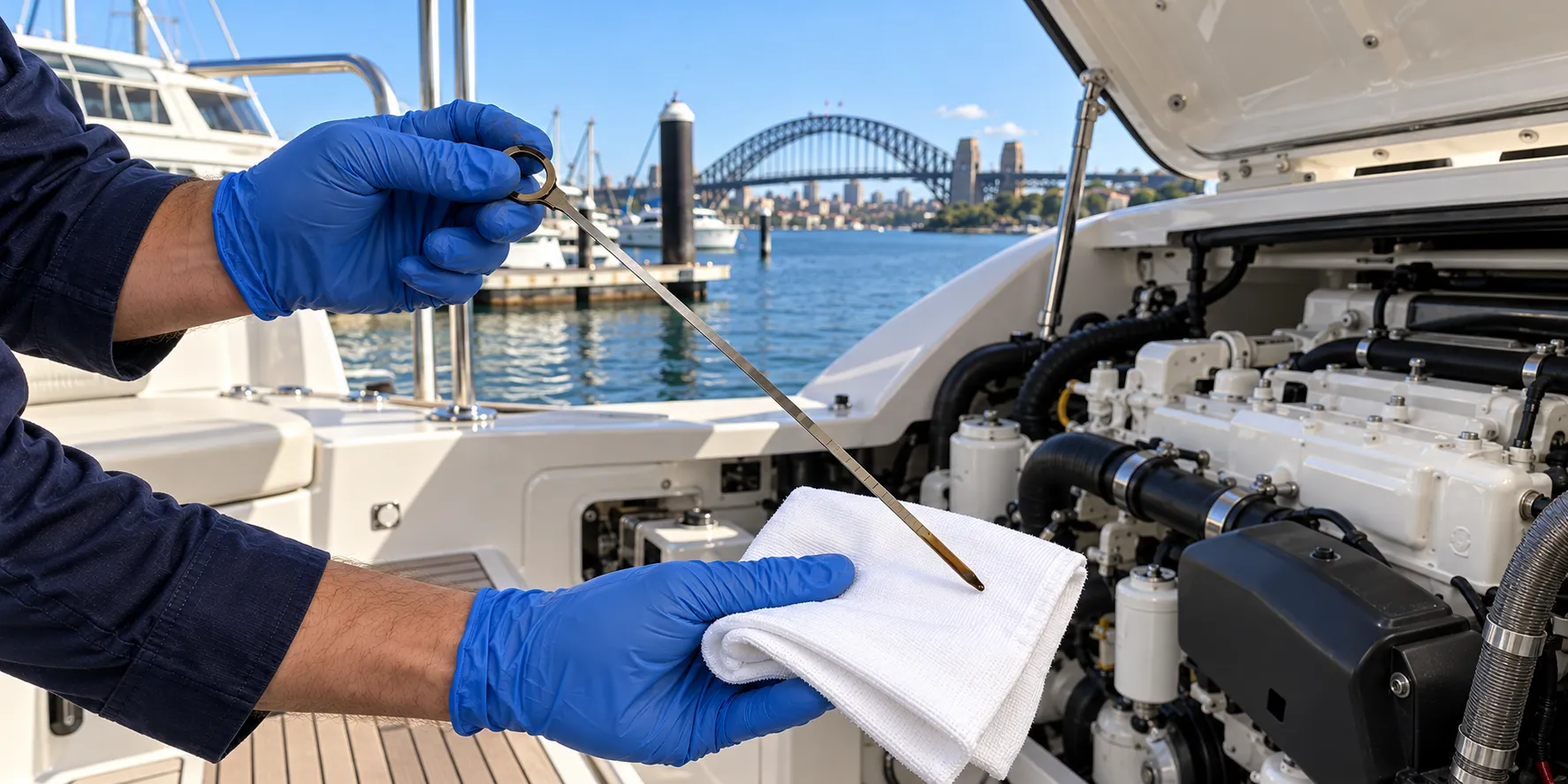
The first step is to check the oil according to the engine manufacturer's instructions and establish whether the level has genuinely changed. Recent servicing records, previous readings and any changes in engine performance can distinguish a measurement issue from a developing fault.
A boat's position and loading can affect how oil sits in the sump, depending on the engine installation. A reading taken while the vessel is at a different angle may appear higher or lower than expected. Comparing readings taken under different conditions can produce a misleading result.
The time between stopping the engine and checking the dipstick also matters. Oil circulates through the engine during operation and gradually drains back into the sump after shutdown. The appropriate waiting period and checking procedure vary by engine, so the manufacturer's instructions should take precedence over a general rule. Marine Safety SA recommends becoming familiar with the engine manual and following manufacturer-recommended engine maintenance.
Recent servicing is another possible explanation. An engine may have been overfilled if too much oil was added during a change or top-up. The specified capacity, the amount drained and any residual oil can all affect the final level. An above-limit reading after servicing does not automatically indicate contamination, but it should be investigated rather than treated as harmless.
Owners can establish a useful baseline by recording the reading, when it was taken, whether the engine had recently run and whether oil had been added. Existing service records may also reveal when the increase first appeared. Understanding what a marine mechanic checks during servicing helps owners understand the relevance of those records.
If the level remains unusually high when checked under the correct conditions, avoid running the engine simply to see if the reading changes again. Seek advice before further operation.
When the oil level increases, diesel fuel or coolant entering the sump is an important possibility. Fuel dilution occurs when diesel mixes with engine oil, potentially reducing its viscosity and weakening its ability to protect moving components. Coolant contamination occurs when cooling-system fluid enters the lubrication system.
The source depends on the engine's design and condition. Possible fuel-related causes include leaking injectors, fuel pumps or other components that allow diesel to reach the crankcase. Coolant may enter through a failed gasket, a compromised heat exchanger or another fault connecting the cooling and lubrication systems. These are possible causes for a mechanic to investigate, not a diagnosis based on the dipstick alone.
Oil appearance and smell can provide clues, but neither reliably confirms or excludes contamination. Similarly, a coolant level that is falling may support further investigation without proving that coolant has entered the sump.
A rising oil level is therefore a symptom that requires further assessment. The mechanic needs to establish whether the increase is genuine, determine whether another fluid is present and investigate the possible routes through which it could have entered the lubrication system. This evidence helps distinguish a straightforward overfill correction from a more serious mechanical fault.
An unexplained increase in engine oil level warrants prompt advice before further operation. If the reading exceeds the manufacturer's maximum or fuel or coolant contamination is suspected, do not start the engine or depart on another trip until the situation has been assessed.
More liquid in the sump does not necessarily mean more usable lubricant. Fuel can thin the oil, coolant can interfere with lubrication and excessive oil can cause problems even when no contamination is present. A diesel engine that starts easily and sounds normal may still have a lubrication issue.
The safest response also depends on the vessel's location. A boat secured at its berth presents different risks from one already underway on Sydney Harbour, where an abrupt loss of propulsion could create a navigational hazard.
Engine oil must maintain a suitable lubricating film between moving surfaces. When diesel fuel mixes with the oil, it can reduce viscosity and compromise that protective film. Coolant contamination can interfere with lubrication and contribute to corrosion, deposits and component wear. The severity depends on the type and amount of contamination and how long the engine has operated with it.
Overfilling can also be harmful. Depending on the engine design and the degree of overfilling, rotating components may churn the oil and introduce air into it. This can interfere with consistent lubrication, while excessive oil may also contribute to other operating problems. The manufacturer's specified upper limit is important.
Simply draining excess liquid until the dipstick reading appears normal does not establish that the remaining oil is fit for use. If fuel or coolant continues to enter the sump, the underlying fault remains. Likewise, changing the oil without correcting the source may only provide temporary relief.
Repeatedly starting the engine to reproduce the symptom can increase the risk of damage if the oil has been compromised. Any running tests required for diagnosis should be determined by a qualified mechanic after considering the engine's condition. The distinction between routine owner checks and more involved work is also covered in boat repairs owners should leave to professionals.
An oil-pressure warning, abnormal mechanical noise, rough running or unexplained coolant loss should be reported to a mechanic alongside the rising oil level. Explain when each symptom occurred and if several appeared together. These details may help narrow the investigation, although none independently confirms a particular fault.
The absence of warning signs does not establish that the engine is safe to operate. Contamination may develop before a dashboard warning appears, and normal oil pressure does not guarantee that the lubricant retains its required properties.
If the boat is safely secured, leave the engine off while seeking advice. If the vessel is already underway, prioritise navigational safety and contact appropriate marine assistance. Whether to shut down immediately depends on the circumstances, including the risks of losing propulsion in the vessel's current position.
When requesting assistance, explain the boat's location, whether the engine is running, any active alarms and the change observed on the dipstick. Avoid improvised tests or repairs while waiting for guidance.
Changing contaminated oil may be necessary, but it does not explain why the level increased. A proper investigation identifies the source of the additional fluid and establishes what needs to be repaired before the engine returns to normal service.
The diagnostic process should reflect the engine's design, service history and reported symptoms. Similar oil-level changes can have different causes, so testing and supporting evidence are more useful than replacing parts based on assumptions.
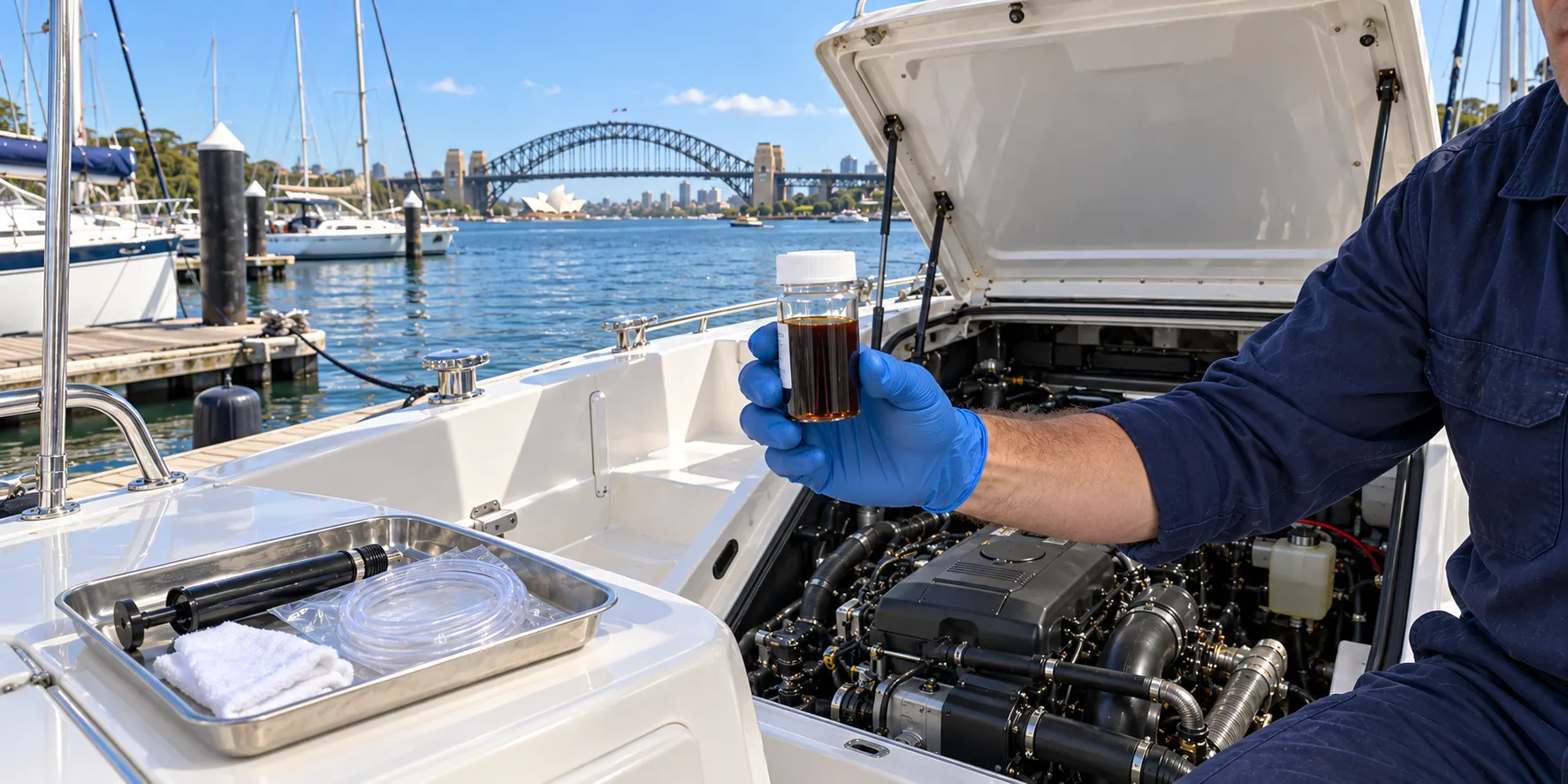
A marine mechanic may arrange laboratory oil analysis to check for fuel dilution, water or indicators of coolant contamination. Depending on the tests performed, the results may also provide information about viscosity and wear-related metals. Their significance depends on the sample quality, the testing method and the engine's operating history.
Visual inspection and smell can contribute to the assessment, but they are not substitutes for appropriate testing. Milky-looking oil may indicate water or coolant contamination, while oil that appears normal may still contain diesel. A diesel smell alone cannot reliably establish the extent of dilution or identify the source.
If the findings suggest fuel dilution, the mechanic may inspect relevant fuel-system components and potential leakage paths into the crankcase. The checks will depend on the particular engine and may involve injectors, fuel pumps or other components where a fault could allow fuel to enter the lubrication system.
Suspected coolant contamination may require cooling-system pressure testing, inspection of relevant gaskets or heat exchangers, or other engine-specific checks. The mechanic will consider the cooling arrangement and any possible connections between cooling and lubrication passages. Coolant loss, oil-analysis results and test findings should be assessed together rather than treated as separate proof of a specific failure.
For further information, read how professional marine diesel diagnostics identify faults. The objective is to confirm what has entered the sump, identify the likely source and determine the extent of any resulting damage.
When seeking a marine diesel mechanic in Sydney, boat owners should contact experts to discuss diesel engine troubleshooting and repair options. The appropriate assessment will depend on the engine, the observed oil-level change and any additional symptoms. A diagnosis should be based on inspection and testing rather than assumptions made before the engine has been assessed.
Before approving repairs, ask what the proposed checks are intended to establish and what evidence supports the recommended work. An initial inspection may identify the need for further testing, so the likely scope of work and any additional costs should be explained before components are replaced.
Once the source of contamination or overfilling has been addressed, the mechanic may need to replace the engine oil and filters in accordance with the manufacturer's requirements and the circumstances of the fault. Further inspection may also be necessary if the engine has operated with contaminated lubricant.
Arrange appropriate used oil collection and recycling, and confirm that the waste provider accepts oil contaminated with fuel or coolant.
The repair should then be verified. Follow-up checks should establish that the oil level remains stable under consistent measurement conditions, relevant coolant levels behave as expected and any associated warnings or running problems have been resolved. Owners should also ask what to monitor after returning the boat to service and which changes require another inspection.
An unexplained rise in engine oil level should never be dismissed simply because the diesel engine still runs normally. Accurate measurements, appropriate testing and repairs that address the underlying cause can help prevent avoidable damage. Hume Marine can be contacted to discuss the symptoms and the assessment needed to determine the next steps before the vessel returns to regular use.

In 45 years of maintaining our Classic Formula 233......Ian, Scott, Patrick and the team from HUME MARINE are by far the best Marine Engineers we have ever encountered.
Our recent re-powering project involved far more than a standard engine installation, using many custom parts and applying bespoke engineering. Only an organisation like HUME MARINE with the experience and expertise we required was capable of thinking "outside the box" to make it all work.
And work it did! Thank you to Ian and his team for making our dream Formula 233 become a reality.
Fishfinder Charters have known Hume Marine for 20 years plus, Ian and his team conduct there business with total professionalism and reliability, All jobs are treated with care, good diligence and consideration toward time and cost.
He has recently installed our new Cummins main engine to Fishfinder! beautiful Job! every detail was checked comprehensively and double checked to meet survey requirements to conform with safety and reliability. We have no issues with recommending Hume Marine to service your marine mechanical needs.
We received the most extraordinary service, despite the shipyard being busy.
Communication was efficient, effective & with the our specific needs at the forefront.
All staff at Hume Marine were cooperative & helpful with backup & offers of support for us, with our new yacht was above & beyond.
We are extremely grateful to Ian & all his staff for the outstanding service & excellent workmanship at White Bay 6.
Cheerful, happy & willing to go the extra mile. Cannot thankyou enough!
Ian has looked after Sea Squire for many years including installation of a new Steyr diesel motor & a complete mechanical refit. He is always available & offers practical solutions to any issue.
Ian and Scott Hume, along with Anthony (apprentice), recently completed a FULL service onboard our 45' support craft, "The UTE", owned and operated by Iain Murray, and the sailing Team "andoo Comanche". This full service was just a fantastic job, which high levels of enthusiasm and curiosity were on show. They were genuine in their actions, as well as very skilful, and had the whole of job completed in 5 hours, 2 x main engines, 2 x transmissions, all fuel filtration, all lub-oil filtration, seawater impellers, as well as cleaning of machinery space, as they completed. This was a great job, completed by good old-fashioned service, I/we will not use anyone else for our service reliability requirements.
Ian Hume has serviced my boat Palm Beach 38 for a number of years. I have always found him to be responsive and thorough. His knowledge of the Steyr engines and the PB have been very helpful when troubleshooting and fixing problems.
Ian and the guys at Hume Marine have looked after my Caribbean 26 for around 10 years. I literally ran up over 2000 hours of game fishing off Sydney and the boat always got back me back to marina without ever once having to it get towed.
Ian and his crew completely looked and after it, regular engine servicing, engine and stern drive repairs, antifouling, electrical and general boat maintenance.
Great guy, easy to deal with and offers a reasonable price.Thoroughly recommend Hume Marine to anyone who requires boat engine maintenance, repairs, antifouling on their petrol or diesel boats.
Hume Marine has been the best company so far I've used. Wouldn't use anybody else. Do yourself a favour and use ian for your next service.
Ian and the team from Hume Marine have been looking after our boat since returning to Sydney Harbour in 2016.
As the recommended Sydney based Steyr engine expert Ian has demonstrated great knowledge and expertise in maintaining our vessel.
Not only has Ian proven himself to be reliable and trustworthy his advice has always given us great confidence in his work.
Christina and Sharon
Tally Ho
Ian has been servicing my boats for 18 years now and I highly recommend him, he has always been trustworthy and reasonably priced.


